

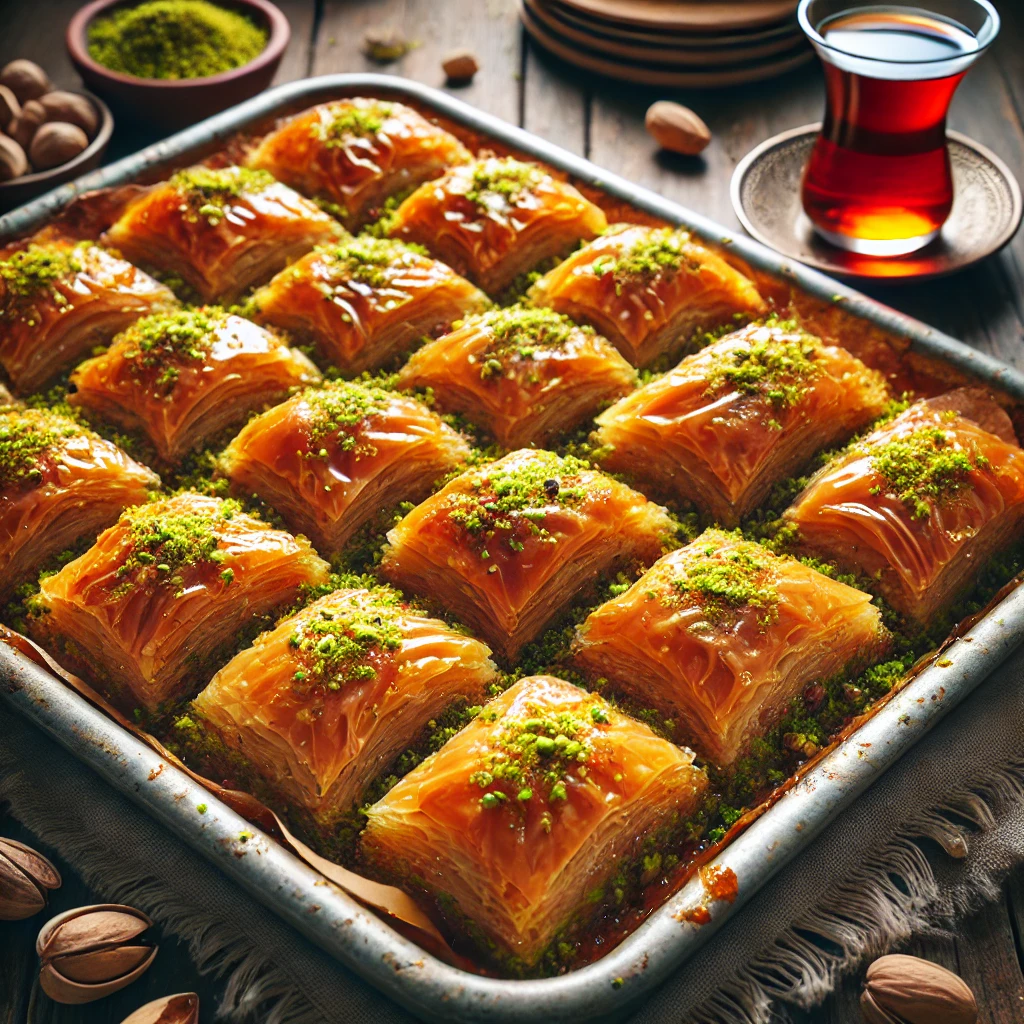
Baklava is a decadent dessert cherished for its delicate layers of crispy filo dough, rich nut filling, and sweet syrup or honey glaze. Originating from the Middle East and refined during the Ottoman Empire, this delightful pastry is now a staple in Turkish, Greek, and Middle Eastern cuisines, each with its distinct variation.
A Journey Through Baklava’s History
The roots of baklava trace back to ancient civilizations, including the Byzantines and Persians, who influenced its evolution. The Ottomans later refined the recipe, transforming it into a royal delicacy. Over time, different cultures have embraced baklava, adding their own regional flair.
The Essential Ingredients and Preparation
The magic of baklava lies in its simplicity and the quality of its ingredients:
- Paper-thin filo dough
- A mix of crushed nuts (pistachios, walnuts, or almonds)
- Butter or ghee
- Sugar and honey
- Aromatic spices like cinnamon or cardamom (optional)
How to Make Authentic Baklava
- Layer the Filo Dough: Brush each delicate sheet with melted butter for crispiness.
- Incorporate the Nut Mixture: Spread a generous layer of finely chopped nuts between the dough.
- Bake Until Golden: Achieve the perfect balance of crunch and softness by baking to perfection.
- Drizzle the Syrup: Pour a fragrant honey or sugar-based syrup over the hot pastry.
- Let It Soak: Allow time for the syrup to seep in, ensuring a luscious texture.
Regional Twists on Baklava
Every culture brings a new dimension to baklava:
- Turkish Style: Often features pistachios and a lighter sugar syrup.
- Greek Variation: Combines walnuts and cinnamon, drenched in thick honey syrup.
- Middle Eastern Version: Frequently infused with floral essences like rosewater or orange blossom.
- Persian Baklava: Highlights almonds and aromatic spices such as cardamom.
Nutritional Insights and Health Benefits
Although indulgent, baklava contains some nutritional perks:
- Nut-based benefits: Packed with healthy fats, fiber, and essential minerals.
- Honey’s natural goodness: Aids digestion and offers antioxidants.
- Balanced consumption: A small serving satisfies cravings without excess sugar intake.
Best Ways to Serve and Store Baklava
- Enjoying Baklava: Serve it at room temperature alongside traditional Turkish coffee or herbal tea.
- Storing Tips: Keep in an airtight container at room temperature for freshness or refrigerate for longer shelf life.
Baklava is more than just a dessert it’s a cultural symbol that represents centuries of craftsmanship and flavor. Whether you prefer a traditional or modern twist, baklava is sure to satisfy your sweet tooth and bring a taste of history to your table.