

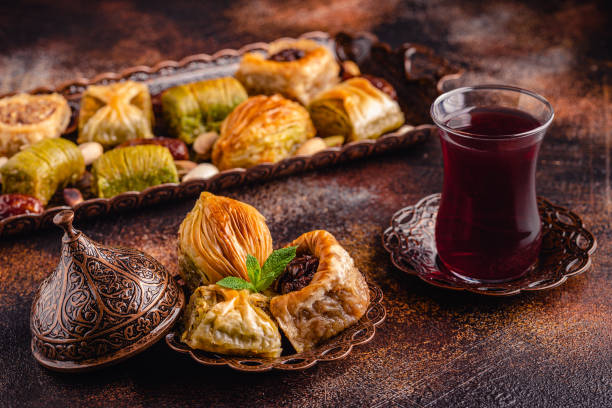
Baklava, one of Turkey’s most iconic desserts, is much more than a culinary delight. It is a symbol of cultural heritage, celebrations, and the art of hospitality. With its intricate layers, rich flavors, and historical significance, baklava continues to be a centerpiece of Turkish life, from festive occasions to intimate gatherings.
Baklava’s Historical Roots
Baklava’s origins trace back to ancient Mesopotamia, but its refinement into the dessert we know today occurred during the Ottoman Empire. In the royal kitchens of the Topkapi Palace, baklava was perfected by talented chefs who crafted it for sultans and dignitaries. Over time, it spread beyond the palace walls, becoming a beloved treat for people across Anatolia.
The art of making baklava has been passed down through generations, with regional variations adding diversity to this classic dessert. Gaziantep, for instance, is renowned for its pistachio baklava, earning a protected geographical indication (PGI) status for its craftsmanship and quality.
The Essence of Baklava: Ingredients and Craftsmanship
Traditional baklava is made with just a few simple ingredients: phyllo dough, nuts, butter, and syrup or honey. However, the true magic lies in the craftsmanship. Thin layers of phyllo dough are meticulously rolled and stacked, alternating with layers of finely chopped nuts such as pistachios, walnuts, or hazelnuts. Each layer is brushed with melted butter, creating a golden, flaky texture when baked.
Once baked to perfection, the baklava is drenched in a sweet syrup made from sugar, water, and lemon juice, or occasionally honey. This syrup not only adds sweetness but also preserves the baklava, allowing it to be enjoyed over several days.
Baklava in Celebrations
In Turkish culture, baklava is synonymous with celebration. It takes pride of place during religious holidays such as Eid al-Fitr (Ramazan Bayramı) and Eid al-Adha (Kurban Bayramı). Families prepare or purchase large trays of baklava to share with guests, symbolizing generosity and joy.
Baklava is also a staple at weddings, symbolizing sweetness and prosperity for the couple. In some regions, the bride’s family presents trays of baklava to the groom’s family as a gesture of goodwill. This tradition highlights the importance of hospitality and the sharing of blessings.
Modern Interpretations of Baklava
While traditional baklava remains a timeless favorite, modern interpretations have emerged, reflecting contemporary tastes and innovations. Chefs experiment with flavors like chocolate, orange zest, or even savory fillings. Vegan and gluten-free options cater to diverse dietary preferences, ensuring that baklava remains accessible to everyone.
Boutique baklava shops have also elevated the presentation of this dessert. Luxurious packaging and creative designs make baklava an ideal gift for special occasions, blending tradition with sophistication.
The Cultural Significance of Baklava
Baklava is more than just a dessert; it is a bridge between the past and present, connecting generations through shared traditions. Its preparation often involves multiple family members, turning it into a communal activity that strengthens bonds and fosters a sense of unity.
In Turkish households, offering baklava to guests is a sign of respect and hospitality. It conveys a warm welcome and reflects the host’s care and effort. Beyond Turkey, baklava has become a global ambassador of Turkish culture, enjoyed and celebrated around the world.
Finding Quality Baklava
For those seeking authentic Turkish baklava, it is essential to choose products made with high-quality ingredients and traditional methods. Renowned providers like exporgin.com offer curated selections of baklava, ensuring an experience that honors its rich heritage.
Baklava A Timeless Delight
Baklava’s enduring charm lies in its ability to bring people together, celebrate joyous moments, and honor a culinary tradition that spans centuries. Whether enjoyed at a festive gathering, gifted to a loved one, or savored with a cup of Turkish tea, baklava remains a sweet symbol of Turkey’s cultural richness and hospitality.
As you take a bite of baklava, you’re not just enjoying a dessert; you’re partaking in a legacy of artistry, love, and tradition that continues to inspire and delight.